Hugo Pereira General Manager of GreenCoLab, a collaborative laboratory located at the University of Algarve, which is part of several Algae Vertical sub-projects, explained the mission of this innovative project in the algae industry, on Antena 1 – RTP “90 seconds of science” podcast. The episode entitled “At the University of the Algarve, a group of researchers is trying to valorise the algae sector by improving its sustainability” is available here.
Transversal | ISAP – 8º Congress of the International Society for Applied Phycology
From 16 to 21 June, the 8th Congress of the International Society of Applied Physiology (ISAP) took place in Porto This year’s theme was “Algae 2030: Opportunities and Challenges”, and the Algae Vertical project was represented by several sub-project co-promoters, including GreenCoLAb, the University of Aveiro, ALGAplus, the University of Minho, CIIMAR and CCMAR. During the event, several posters and presentations showcasing the work carried out under the Algae Vertical project were highlighted. Algae Vertical presented significant results related to the production of micro and macroalgae, microbiome, biorefinery, among other topics.
The ISAP congress is an essential platform for researchers and students in the field of algae, providing a favourable environment for participation in forums, thematic discussions, the exchange of ideas and the creation of new networks, which are fundamental for the future of the participants.
University of Minho at the International Conference on Algal Biomass, Biofuels and Bioproducts (AlgalBB), Florida
The International Conference on Algae Biomass, Biofuels and Bioproducts (AlgalBB) took place in Florida, from 10 to 12 June, and the University of Minho represented SP1a with a presentation on Pavlova gyrans. Entitled “Pavlova gyrans as a promising and sustainable source of carotenoids – optimisation of the main growth parameters”, this presentation highlighted the value of microalgae as a source of bioactive compounds.
In 2024, the conference addressed emerging technologies in algae research, including microalgae, macroalgae and cyanobacteria. Topics included synthetic biology, molecular biotechnology, biomass production, cultivation, harvesting, extraction and biorefinery.
Vertical Algae Featured in Voz do Campo Magazine
Nordic algae Symposium – ISA
Anabela Raimundo from the University of Lisbon’s Instituto Superior de Agronomia, was one of the speakers at the Nordic Algae Symposium, in Copenhagen.
The presentation, entitled “Food and Feed for the future: the role of microalgae as a sustainable ingredient”, focused on the importance of alternative food sources, with microalgae playing a crucial role. Climate change, the increase in the world’s population and the transition from domestic to large-scale consumption involve a number of strategies. This paper presents case studies of these strategies that show the impact of microalgae on the nutritional profile, texture and appearance of food.
SeaWheat – COST Action
Co-promoter ALGAplus took part in the workshop “Emissions, Capture, Utilisation: Methodologies and Challenges for Ulva” in Estonia, organised by SeaWheat COST Action. Inês Oliveira, from ALGAplus, presented a poster and a presentation on the company’s development over the last decade and its involvement in projects such as Algae Vertical, which contribute to the evolution of the blue economy. The COST SeaWheat action (CA 20106 – TOMORROW’S ‘WHEAT OF THE SEA’: ULVA, A MODEL FOR INNOVATIVE MARICULTURE) uses interdisciplinary methods to sustainably exploit marine resources, focusing on the biology, ecology, aquaculture, engineering and socioeconomics of Ulva. In line with the food security priorities of Horizon 2020 and UN Sustainable Development Goal 14, SeaWheat promotes the conservation and sustainable use of marine resources.
Transversal | 2nd Marine Forest Festival
Iberagar, a participant in the Algae Vertical project and a specialist in macroalgae for the hydrocolloid sector, has been invited to take part in the Marine Forest Festival. The event, organised by the University of the Algarve, the Centre of Marine Sciences (CCMAR) and Vila do Bispo Town Council, took place from 7 to 11 May at Porto da Baleeira in Sagres. Iberagar was part of the ‘Alga Talks’ activity in which it presented a talk entitled ‘Iberagar: Activity, Research and Development’ about its activity and the projects it is involved in, one of which is Algae Vertical

XPERiMENTA 2024
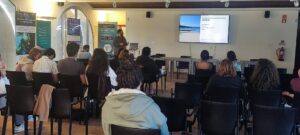
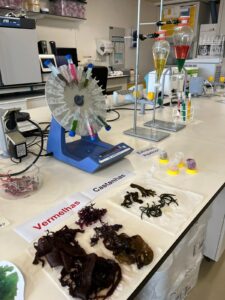
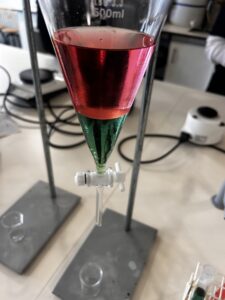
Researchers from the University of Aveiro organised an exciting activity for high school students, part of XPERiMENTA, in the context of Algae Vertical’s SP1A sub-projects. Entitled ‘Algarte: Exploring the colours and textures of seaweed’, this experience allowed young people to explore the science behind seaweed’s polysaccharides, lipids and pigments. They learned how to extract biomolecules and analyse their properties, such as colour and the formation of gels and films. This scientific ‘journey’ through the richness of seaweed incited scientific curiosity, provided practical experience and promoted networking with researchers

GreenCoLab launches ‘Algae on the Menu’ project
GreenCoLab has just launched an innovative educational and informative project called ‘Algae on the Menu’, as part of the dissemination of Subproject 7, in collaboration with Sp4b. This project, led by Kricelle Deamici, head of the Food team, in partnership with Chef Leonel Pereira from CHECKin Restaurant in Faro, promises a series of interactive activities with the community. Workshops, classes, masterclasses and showcooking sessions will be held, providing a unique and flavoursome experience that highlights seaweed as a versatile and nutritious ingredient.
IX Bioengineering Week
As part of sub-project 4b, CoLab4Food took part in the IX Bioengineering Week, which ran from 22 to 26 April at the Instituto Superior Técnico in Lisbon. During the event, a workshop entitled ‘Green Cuisine: The Gastronomic Potential of Microalgae’ was organised, led by CoLab4FOOD researchers, in which participants learnt about the various gastronomic applications of microalgae. The 9th edition, organised by the Biological Engineering, Biotechnology, Pharmaceutical Engineering, Bioengineering: Regenerative and Precision Medicine, and Bioengineering and Nanosystems courses, included lecture cycles, workshops, pitch sessions, alumni sessions, study visits, a company fair and a debate.